
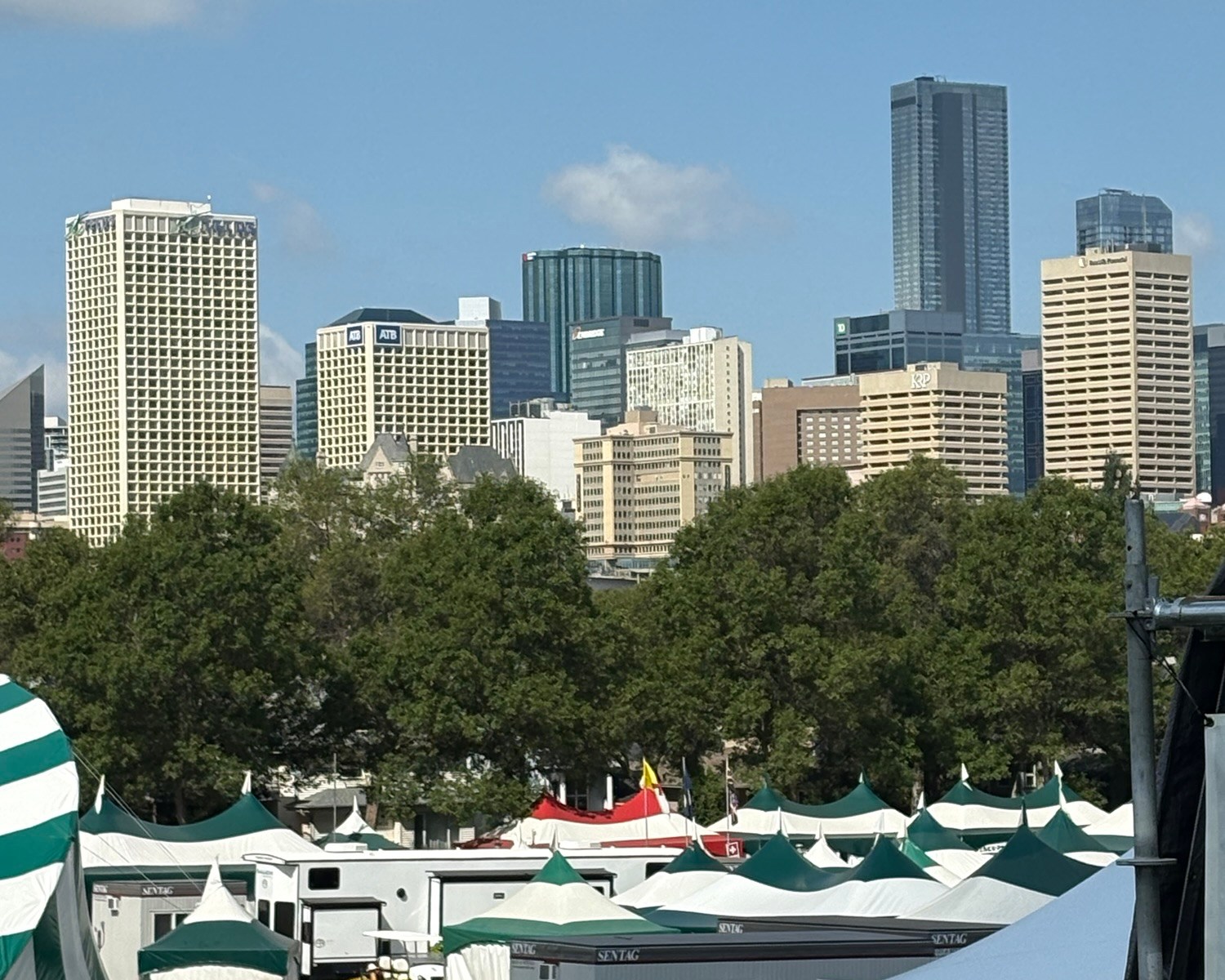
This report documents the conditions and interventions used during Folk Fest 2026, our 18th Folk Fest. It is part of an ongoing practice of recording how I navigate complex situations. The goal is not to prescribe a path for others, but to demonstrate that even when conditions are difficult, there are often specific, actionable interventions within our control that reduce stress and increase access.
Objective
To attend Folk Fest without depletion of energy resources and with manageable access.
Hypothesis
Targeted interventions (pacing, physical supports, sensory regulation) will offset accessibility barriers, enabling full participation despite variable weather and terrain.
Conditions
Weather volatility
Forecast predicted torrential rain/cold
Terrain accessibility
Unknown mud levels, hill gradients, and effectiveness of sand/gravel placement for scooter navigation.
Parking logistics
Availability of handicapped spots allowing joint entry with Kip versus drop-off separation.
Crowd density
Potential for overcrowding affecting scooter maneuverability.
Interventions
Weather uncertainty
Layered clothing system for temperature fluctuations. Evening slippers for cold feet
Prevention of spasticity
Chair pad to reduce pressure on thigh from chair bars
Energy preservation
Planned early exits on high‑energy days . Housekeeping arranged for Sunday. Massage booked for the day after
Parking logistics
Early arrival to get accessible parking, parking placard
Crowd density
Headphones/meditation for regulation in transition moments and when overstimulated during event.
Terrain accessibility
Accompaniment of scooter and use of accessible tents if needed.
Observations
Weather
Forecasted torrential rain did not materialize; temperatures fluctuated between chilly nights and mild daytime conditions.
Terrain
Sand was placed in high-traffic areas and appeared to improve scooter traction and boards were in place to navigate like a boardwalk; some hilly sections remained challenging but were navigable.
Parking
Handicapped parking was available, allowing joint entry with Kip and reducing logistical strain.
Crowd density
Manageable for scooter navigation; noise-canceling AirPods were used during peak sensory periods.
Physical comfort
Layered clothing and evening slippers maintained warmth; chair pad reduced thigh pressure and leg pain.
Pacing
Early exits on higher-energy days prevented significant post-event depletion.
Support
Housekeeping and massage reduced cumulative fatigue.
Result
Hypothosis was supported. Targeted interventions and enabled full participation without energy depletion.
Every good experiment is a series of small adjustments.
Christine Rutherford

